
Missing teeth can impact more than just your smile’s appearance; they can affect your ability to eat comfortably, speak clearly, and even influence the alignment of your remaining teeth.
At The Ealing Dental Practice, dental bridges offer a stable and natural-looking solution to effectively replace missing teeth, restoring the harmony, function, and beauty of your smile.

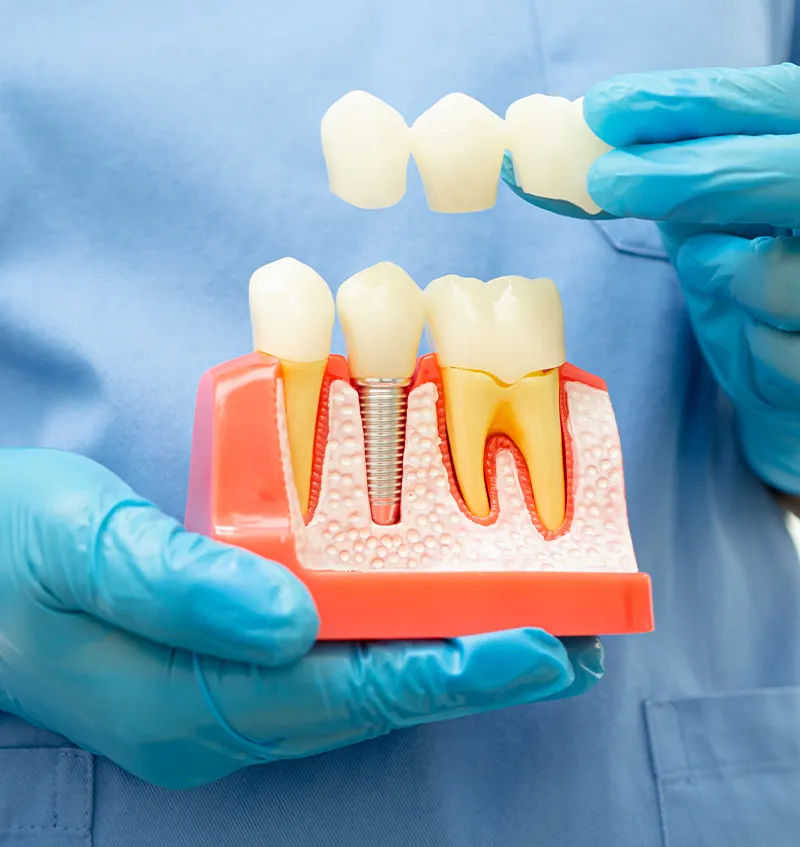
A dental bridge is a custom-designed restoration that literally “bridges” the gap created by one or more missing teeth. It typically consists of artificial teeth (pontics) anchored by crowns placed on the adjacent natural teeth (abutment teeth). These abutment teeth act as supports, holding the pontic securely in place.
Choosing a dental bridge can provide numerous benefits for your oral health and quality of life, including:
Getting a dental bridge typically involves a few appointments:
With proper care, a dental bridge can last for many years. This includes:
Restore the completeness and confidence of your smile with a custom-designed dental bridge at The Ealing Dental Practice. Contact us today to schedule your consultation!
Missing teeth can affect more than just your smile—they can impact how you speak, eat, and feel. Dental implants offer a long-lasting, natural-looking solution that restores both function and confidence. Whether you’re missing one tooth or several, implants are carefully placed to blend seamlessly with your smile and feel just like your own.
Using the latest techniques and materials, we create a personalised treatment plan tailored to your needs, ensuring comfort, precision, and a result that not only looks great—but supports your long-term oral health too. With dental implants, you’re not just filling a gap—you’re investing in a stronger, more confident future.

In some cases, saving a damaged tooth simply isn’t possible. When that happens, a dental implant can be the ideal solution—replacing the missing tooth without affecting the healthy ones around it. Unlike bridges, implants don’t require other teeth to be altered or prepared, making them a long-lasting and conservative option.
Dental implants may be suitable if you:
Even if you’ve lost some bone in your jaw, treatment may still be possible with a bone graft to build support for the implant.
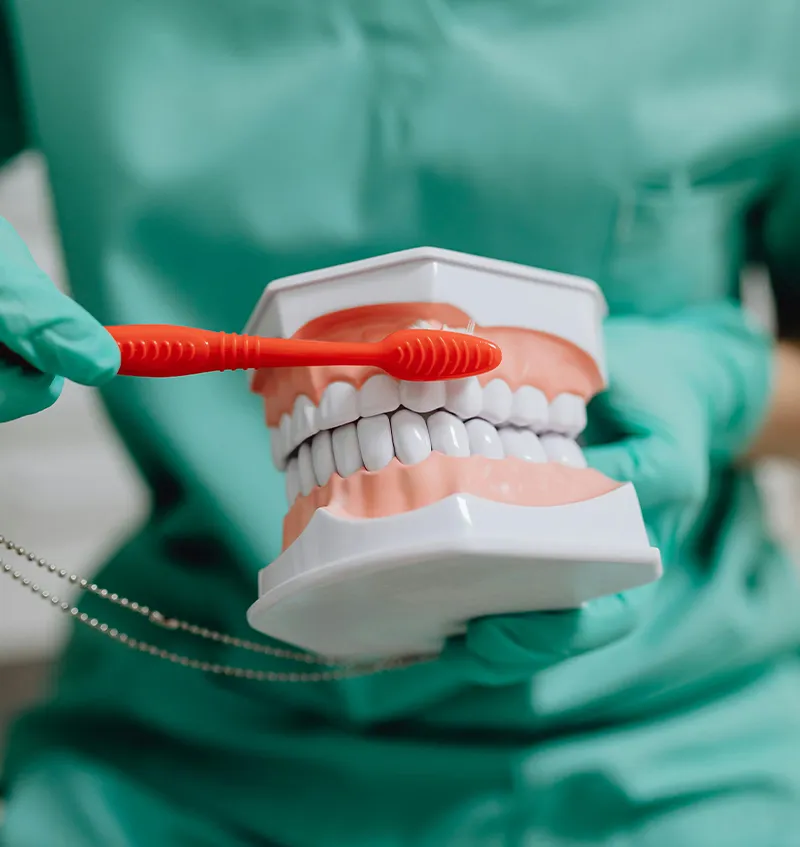
A dental implant is a small titanium post placed into the jawbone. It acts like an artificial root and provides a strong, stable base for a custom-made crown. Implants are fixed in place, so unlike dentures or bridges, they won’t slip or move—giving you confidence when eating, speaking, and smiling.
Once we’ve confirmed you’re a good candidate, your implant will be placed under local anaesthetic. The implant is gently positioned in the jaw, and the area is left to heal over 2–3 months while the implant bonds with the bone (a process called osseointegration).
After healing, we’ll attach a small cap to guide gum shaping and take detailed impressions. These allow our lab to create a crown that matches your natural teeth perfectly. You’ll return in about two weeks for the final stage.
In your final visit, the healing cap is removed, and your new custom-made crown is fitted securely to the implant. We check the fit and alignment with x-rays and ensure everything feels and looks just right.
Implant crowns can be either screw-retained or cemented, depending on what’s best for your smile and long-term care.
Not in the same way they do around natural teeth. The gums form a healthy seal around the implant to protect it, but they don’t attach as tightly as they would to a real tooth. Keeping the area clean with good oral hygiene is key to keeping the gum tissue healthy and protecting your implant long-term.
Yes, you can. While your implant is healing, we can provide a temporary tooth such as a removable denture (known as a flipper) or a temporary crown to maintain the appearance of your smile and help with eating and speaking comfortably.
With good care, dental implants can last 15 years or more—and often, they last a lifetime. Regular brushing, flossing, and checkups are essential to keeping your implant (and your overall oral health) in great condition.
Yes, like natural teeth, implants can become infected if not cared for properly. This is known as peri-implantitis and is caused by a build-up of plaque or bacteria. The good news? It’s preventable with good oral hygiene and regular dental visits.
Most people who are generally healthy and have one or more missing teeth are potential candidates. You’ll need healthy gums and enough bone in your jaw to support the implant. If needed, we can explore bone grafting to make treatment possible. We may advise against implants if you have certain health conditions (like uncontrolled diabetes) or are a heavy smoker, as these can affect healing.
The procedure is carried out under local anaesthetic, so you won’t feel pain during treatment. Some mild discomfort afterwards is normal, but this can be managed with over-the-counter or prescribed pain relief. Most patients are pleasantly surprised by how easy the process is.
Yes—your implant will be carefully colour-matched and shaped to blend in seamlessly with your surrounding teeth. Most people won’t be able to tell the difference.
Look after your implant just like a natural tooth: brush twice daily, floss regularly, use mouthwash, and visit your dentist for routine checkups. Avoid hard or sticky foods while healing, and maintain excellent oral hygiene to keep your implant strong and healthy.
We look forward to welcoming you to our practice. To schedule your first appointment:
OR Call us at 020 8567 2235
If you have any questions before your visit, please don’t hesitate to contact us.